

The Basilica of St. Peter in the Vatican (photo left), is the second patriarchal church at Rome (after the Basilica of St. John Lateran), and under the main altar lies the precious mortal remains of St. Peter, the “rock” on which Christ built his Church. St. Peter was martyred during the persecutions of the Emperor Nero from 64-67 B.C. He was crucified upside down in Nero’s circus (arena) for the enjoyment of the crowds and to cast blame away from Nero after the Great Fire of Rome in July, 64 A.D. He was originally buried originally in a simple grave on the Vatican Hill. The Basilica of St. Paul Outside the walls (photo right) lies over the remains of St. Paul, who was martyred during the same persecutions. Since Paul was a Roman citizen (having been born in Tarsus), he could not be … [Read more...]
All Hallows’ Eve
Halloween or All Hallows' Eve is not a liturgical feast on the Catholic calendar, but the celebration has deep ties to the Liturgical Year. These three consecutive days ”” Halloween, All Saints Day and All Souls Day ”” bring to mind the Communion of Believers. On earth we are called the “Church Militant,” because we are striving to get to heaven. We pray for the “Church Suffering,” the souls in Purgatory, especially on All Souls Day (and even the entire month of November). We also honor and ask the intercession of the “Church Triumphant,” those souls, whether canonized or uncanonized, who are in Heaven. In England, saints or holy people are called “hallowed,” hence All Saints Day was “All Hallow's Day.” The evening before the feast became popularly known as “All Hallows' Eve” or even … [Read more...]
Missionaries and Martyrdom
The North American Martyrs October 19, 2025 The only reason we know about Jesus Christ is that someone told us. More than likely, that person was our parents, but it could have been a priest, a teacher or even a friend. And the person who told us only knew about Jesus because someone had told him or her. And someone told that person, too. And so on. We trace that chain of people passing on their knowledge of Christ back to the Apostles, who were told by Jesus to: “Go, therefore, and make disciples of all nations, baptizing them in the name of the Father, and of the Son, and of the holy Spirit, teaching them to observe all that I have commanded you. And behold, I am with you always, until the end of the age.” (Mt. 28:19-20). This statement of Jesus is called the “Great Commission” - the … [Read more...]
Our Lady of the Rosary
October 7 In 1571 Pope Pius V instituted “Our Lady of Victory” as an annual feast to commemorate the victory of Lepanto, where Christian forces successfully thwarted an attempted invasion of Western Europe by the Muslim forces of the Ottaman Empire. The victory was attributed to the Blessed Virgin Mary, as a Rosary procession had been offered on that day in St. Peter's Square in Rome for the success of the mission of the Holy League. In 1573, Pope Gregory XIII changed the title of this feast-day to “Feast of the Holy Rosary". This feast was extended by Pope Clement XII to the whole of the Latin Rite, inserting it into the Roman Catholic calendar of saints in 1716, and assigning it to the first Sunday in October. Pope Pius X changed the date to 7 October in 1913, as part of his effort to … [Read more...]
Blessed Francis Xavier Seelos Feast Day – October 5
Born in Füssen, Bavaria, in 1809, Francis Xavier Seelos was well educated and had a special gift for languages, but his most outstanding characteristic was his humility. He was ordained a Redemptorist priest in Baltimore, Maryland in 1844. Always loyal to the Order's charism, he was at heart a “missionary with a constant smile on his lips and a generous heart, particularly toward the needy and outcasts,” his followers said. His confessional was always open to everyone, and he heard confessions in German, English, and French, from anyone, regardless of their ethnicity. As a priest, he was distinguished for his “simple lifestyle and language,” so much so that his sermons were heard and understood even by the most simple. Of all the souls entrusted to his care, the ones he was especially fond … [Read more...]
St. Januarius September 19
According to various sources, Januarius was born in Benevento to a rich patrician family near Naples, Italy. At a young age of 15, he became a priest of his parish in Benevento, which at the time was primarily pagan. When Januarius was 20, he became Bishop of Naples. During the persecution of Christians by the Emperor Diocletian in 305 AD, Januarius was arrested and beheaded at the Solfatara crater near Pozzuoli. According to the Roman Martyrology, “the body of St. Januarius was brought to Naples, and there honourably interred in the church, where his holy blood is kept unto this day in a phial of glass, which being set near his head becomes liquid and bubbles up as though it were fresh.” The miracle of the liquification is the chief reason for the notoriety of St Januarius. The relic … [Read more...]
St. Pius of Pietrelcina
September 23 Saint Padre Pio was born Francesco Forgione on May 25, 1887 in Pietrelcina, Italy. He was the son of farmers Grazio Forgione and Maria Giuseppa Di Nunzio, and had three younger sisters and one older brother. As a child, Francesco worked on his family farm by taking care of a small flock of sheep that the family owned, but by the time he was five years old, Franceso had already decided to dedicate his life to God. In January of 1903, at the young age of 15 he was allowed to enter the novitiate with the Capuchin Franciscan Friars in Morcone where he took on the name “Friar Pio.” Once he joined the Friary of St. Francis, he had several bouts of serious illness and religious ecstasy. Friars would report strange noises coming from his cell. Friar Pio frequently spoke … [Read more...]
Journey
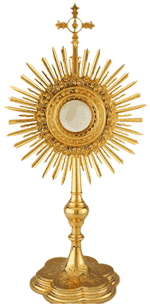
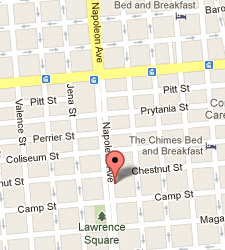
Do you long for a way to grow your faith in God in the company of men of all ages? Journey is a gathering where men pray, read and have authentic discussion about God and their lives. Designed to not conflict with family obligations or work, Journey gathers every Friday morning from 6:00AM until 6:55AM at the Holy Name of Jesus Adoration Chapel (corner of LaSalle and Palmer) and via Zoom. It ends just in time for 7:00AM mass. No preparation is necessary, and feel free to participate as best fits your schedule. If you are interested in attending and/or being added to the weekly email reminder, please contact Dan Jens (dnljens@yahoo.com or 504-228-1415) We also open the Adoration Chapel for silent prayer before the Blessed Sacrament at 5:15 for any men who enjoy prayer before … [Read more...]
In Our Parish
The parish office frequently receives calls from “parishioners” to have their children baptized, get a school voucher, get married or have permission to serve as a godparent. Being a “parishioner” at Good Shepherd Parish means that you either (1) reside in the parish boundaries (Leontine to Seventh Street, Carondelet to the River) or (2) you have completed a parish census form (3) have registered online at goodshepherdparishNOLA.com. This isn’t our rule, it’s the rule of the Archdiocese of New Orleans. To be a “contributing parishioner” (for the purposes of school vouchers) you must use parish envelopes or personal checks for donations. … [Read more...]
The Holy Name of Mary
September 12 By St. Alphonsus de Liguori Richard of St. Laurence states "there is not such powerful help in any name, nor is there any other name given to men, after that of Jesus, from which so much salvation is poured forth upon men as from the name of Mary." He continues, "that the devout invocation of this sweet and holy name leads to the acquisition of superabundant graces in this life, and a very high degree of glory in the next." After the most sacred name of Jesus, the name of Mary is so rich in every good thing, that on earth and in heaven there is no other from which devout souls receive so much grace, hope, and sweetness. Hence Richard of St. Laurence encourages sinners to have recourse to this great name, "because it alone will suffice to cure them of all their evils;" … [Read more...]