Uptown New Orleans Catholic Church on Napolean Avenue - Monsignor Nalty
Rectory 504-899-1378 | Fax 504-899-0480
School 504-891-1927
ststephenpar@archdiocese-no.org


From the Pastor – September 13, 2026
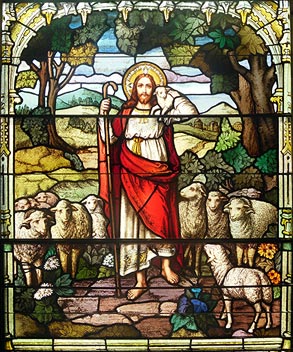 Peter approached Jesus and asked him, “Lord, if my brother sins against me, how often must I forgive? As many as seven times?”
Jesus answered, “I say to you, not seven times but seventy-seven times.” (Mt. 18:21-22)
When I was younger, my sisters and brother and I had a lot of little “family” jokes and expressions. Sometimes when we’re together again, we use them to get a laugh. In our teenage years those “inside jokes” tended to revolve around quotes from television shows or movies that we found funny. Most of us can do imitations of Eddie Murphy’s more memorable gags or lines uttered by Bill Murray in “Caddyshack” or “Stripes.” But one of the older expressions I remember when I was very young was “seventy-eleven.” Of course, it’s not an actual number, but it was used by us as kids to express the biggest number possible. Millions and billions weren’t real to us. But “seventy-eleven” sounded really big. So, if we were going to use a number that Jesus would give in telling us how many times to forgive, we would say “forgive ‘seventy-eleven’ times.”
In the Gospel today, Jesus says “forgive seven times seventy-seven” times. That’s a lot, but it’s a finite number. In fact, it only adds up to 539. If that were the case, we’d have to carry calculators around to make sure we were keeping track as to how many times we’d forgiven. I would bet that most couples who’ve been married more than 20 years could say they’ve forgiven their spouses more than 539 times. And then they kept forgiving beyond that. Seven was used by Peter to indicate a constant stream of forgiveness. Jesus took that number and put it off the charts. We’re supposed to keep forgiving primarily because God continues to forgive us. And most of us have offended Him more than 539 times.
This is a good weekend to remind ourselves that we should forgive. As we recall the 9/11 attacks on our country not so many years ago, we might be tempted to relive those feelings of vengeance and that desire for justice nineteen years ago. Although demands for justice are not necessarily wrong, we should look back on the last twenty-one years and realize that holding on to hatred, vengeance and “debts” tends to hurt us more than it hurts the people we “hate.”
If we’ve gotten over our “hatred” for those terrorists who attacked us, we might want to look around at other “grudges” we’re holding on to, perhaps even within our own families. Maybe there’s someone we need to forgive for the “seventy-eleventh” time.
(Very Rev. Msgr.) Christopher H. Nalty
msgr.nalty@gmail.com
Masses
St. Stephen
Saturday Vigil at 4:00 pm
Sunday at 8:00 am and 10:30 am
Sunday at 5:00 pm at OLGC
Our Lady of Good Counsel (OLGC)
Center of Jesus the Lord
Charismatic Mass
Sunday at 10 am
Weekdays Masses
Monday – Friday 6:30 am St. Henry
Tuesdays 6:00 pm St. Stephen
First Fridays 6:00 pm Latin Mass
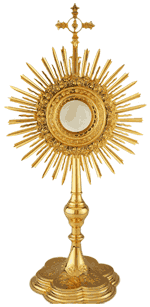
Adoration of the Blessed Sacrament
Tuesdays 4:45 – 5:45pm St. Stephen
Thursdays 7:00 – 8:00am St. Henry
Confession Times at Good Shepherd
Saturdays 3:00 – 3:45pm St. Stephen
Sundays 9:30 – 10:15am St. Stephen
Sundays 10:00 – 10:30am OLGC
First Fridays 6:30 – 7:00pm OLGC
Religious Education
CCD – Sunday School
We offer C.C.D. (Confraternity of Christian Doctrine) classes for grades 1 – 4. Classes meet on Sunday mornings 9:20-10:20, beginning September 27, 2026, and follow the academic calendar. Please register with the parish office.
Order of Christian Initiation for Adults
O.C.I.A. is a process of reflection, prayer, instruction, discernment, and formation for those who wish to come into full communion with the Catholic Church. Catholics are also invited to attend to further their religious education. Already we have six candidates this year! Classes begin Thursday, September 22, 2026 at 6:00pm. If you are interested, please contact the parish office.
Confirmation Classes
For high school students wishing to receive the Sacrament of Confirmation, we are working on a program together with a neighboring parish. Please contact the parish office. These classes will begin later in October.
The Sorrowful Mother September 15
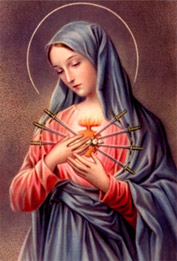 Over thirty days, the Church has celebrated four feasts of the Blessed Virgin Mary: the Assumption (August 15), the Queenship (August 22), the Nativity (September 8), and the Holy Name of Mary (September 12). On September 15, we usually recall “Our Sorrowful Mother,” also known as Mater Dolorosa in Latin. This year the feast will be preempted by the Sunday Mass.
Over the centuries, the Church has recognized popular devotion to seven sorrows of Mary: (1) the Prophecy of Simeon over the Infant Jesus (Lk 2:34); (2) the Flight into Egypt of the Holy Family (Mt 2:13); (3) the Loss of the Child Jesus for Three Days (Lk 2:43); (4) the Meeting of Jesus and Mary along the Way of the Cross (Lk 23:26); (5) the Crucifixion, where Mary stands at the foot of the cross (Jn 19:25); (6) the Descent from the Cross, where Mary receives the dead body of Jesus in her arms (Mt 27:57); and (7) the Burial of Jesus. (John 19:40). Numerous devotions, and even religious orders, have arisen around meditation on the Seven Sorrows.
Our Lady of Sorrows has been the subject of some key works of Marian art. In iconography, Our Lady of Seven Sorrows is at times represented as the Virgin Mary wounded by seven swords in her heart, a reference to the prophecy of Simeon at the Presentation. In other depictions, the expression of the Virgin is one of sadness.
The first known altar to Mater Dolorosa was made in 1221 at the monastery of Schunau in southern Germany. In many countries, parishioners traditionally carry statues of Our Lady of Sorrows in processions on the days leading to Good Friday.
The liturgical feast of the Our Lady of Sorrows originated in 1413, and Vatican approval for the celebration of a feast in honor of Our Lady of Sorrows was first granted to the Servite order in 1667. Pope Pius VII extended the celebration to the whole of the Latin Church in 1814, and Pope St. Pius X established the feast on September 15, the day after the Feast of the Exaltation of the Cross. The sequence known as Stabat Mater is sung at Mass on that day.
In Our Parish
The parish office frequently receives calls from “parishioners” to have their children baptized, get a school voucher, get married or have permission to serve as a godparent. Being a “parishioner” at Good Shepherd Parish means that you either (1) reside in the parish boundaries (Leontine to Seventh Street, Carondelet to the River) or (2) you have completed a parish census form (3) have registered online at goodshepherdparishNOLA.com. This isn’t our rule, it’s the rule of the Archdiocese of New Orleans. To be a “contributing parishioner” (for the purposes of school vouchers) you must use parish envelopes or personal checks for donations.
Parish Mission September 5-6
Passionists in Papua New Guinea
Fr. John Curtis CP is a Passionist Priest who in July celebrated his 50th Jubilee of Ordination. Fr. John first went to Papua New Guinea (PNG) in 1983 where he lived for two years deep in the jungle of PNG. The local people were 70% malnourished and survived by growing vegetables in their gardens. The Passionist developed a number of self-help projects to help the people survive as well as undertaking long patrols in the jungle to bring God’s word and love to the people, often accompanied with lay missionary nurses who brough urgent medical treatment to the villages.
Welcome Home Sunday!
At this past Wednesday’s General Audience, Pope Leo XIV said, “The liturgical year is not a static representation of past events, but an encounter with Christ Himself, who desires to immerse His people in the mysteries of the history of salvation.” The heart of Welcome Home Sunday isn’t just asking someone back into a building, or even back into a habit. We are inviting everyone into an encounter with the living Christ, who still speaks, heals, nourishes, and sends His people forth. The Holy Father continued: “To sanctify Sunday, it is fundamental to celebrate the Eucharist. Listening to the Word and partaking of the Body of Christ entails … the coming together in one, that is, the joyful gathering of the faithful. In this assembly, the Christian community makes visible its communion with the Lord and bears witness to its belonging to Christ and its fidelity to the Church.”
St. Januarius September 19
According to various sources, Januarius was born in Benevento to a rich patrician family near Naples, Italy. At a young age of 15, he became a priest of his parish in Benevento, which at the time was primarily pagan. When Januarius was 20, he became Bishop of Naples. During the persecution of Christians by the Emperor Diocletian in 305 AD, Januarius was arrested and beheaded at the Solfatara crater near Pozzuoli. According to the Roman Martyrology, “the body of St. Januarius was brought to Naples, and there honourably interred in the church, where his holy blood is kept unto this day in a phial of glass, which being set near his head becomes liquid and bubbles up as though it were fresh.”
The miracle of the liquification is the chief reason for the notoriety of St Januarius. The relic of blood is kept in a small flagon-shaped flask and resembles a dark and solid mass. On the Feast of St. Januarius (as well as at other times of the year) the reliquary is brought out and held by the celebrant in view of the assembly. Prayers are said by the people, begging that the miracle may take place. After a short period of time, the solid mass detaches itself from the sides of the glass reliquary and becomes liquid, sometimes even bubbling up. The celebrant then announces “the miracle has happened,“ and Te Deum (“We praise thee, O God”) is sung. Then the reliquary with the liquefied blood is brought to the altar rail so that the faithful may venerate it by kissing the vessel.
Although skeptical scientists have provided a number of explanations for the “liquification,” those explanations have primarily pointed to higher temperature “melting” the solid mass. However, for more than a century, careful observations of the temperature in the presence of the relic have been kept, and it has been demonstrated that there is no direct relation between the temperature, and the time and manner of the liquefaction. While the Catholic Church has always supported the celebrations, it has never formulated an official statement on the phenomenon, and maintains a neutral stance about scientific investigations. Whatever the cause, devotion to St. Januarius is very great in Naples. The blood has failed to liquefy several times, each time coinciding with the outbreak of disease, famine, war or political suppression. It is for this reason that Neapolitans rejoice at each liquification. The blood did in fact liquify on September 18, 2025!
Exaltation of the Holy Cross
On the week when we celebrate the Feast of the Exaltation of the Holy Cross, Archbishop Aymond has asked that every parish offer Confession for an hour and a half. To that end, on Wednesday, September 17, 2025, Confessions will be heard in the Basilica of St. Stephen beginning at 5:00pm until 6:30pm.
Saint Teresa of Calcutta
Feast Day September 5
On 10 September 1946, on a train journey from Calcutta to Darjeeling, Mother Teresa received what she termed the “call within a call,” which was to give rise to the Missionaries of Charity family: “to quench the infinite thirst of Jesus on the cross for love and souls” by “laboring at the salvation and sanctification of the poorest of the poor.” On October 7, 1950, the new congregation of the Missionaries of Charity was officially erected as a religious institute for the Archdiocese of Calcutta.
Throughout the 1950s and early 1960s, Mother Teresa expanded the work of the Missionaries of Charity both within Calcutta and throughout India. From the late 1960s until 1980, the Missionaries of Charity expanded across the globe and in their number of members. Mother Teresa opened houses in Australia, the Middle East, and North America, and the first novitiate outside Calcutta in London. In 1979 Mother Teresa was awarded the Nobel Peace Prize. By that same year there were 158 Missionaries of Charity foundations.
By 1997, the Sisters numbered nearly 4,000 members, and were established in almost 600 foundations in 123 countries of the world.
On September 5, 1997 Mother Teresa died at her Motherhouse in Calcutta. Hundreds of thousands of people from all classes and all religions, from India and abroad, paid their respects. Presidents, prime ministers, queens, and special envoys were present at her funeral on behalf of countries from all over the world.
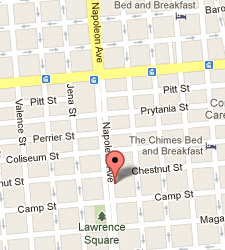
Location Map
Join Knights of Columbus
NOLA Adoration Chapels