

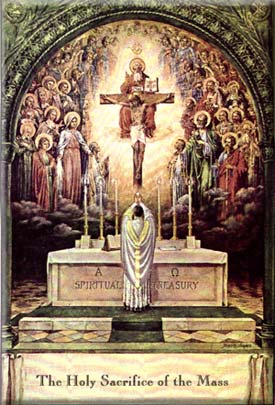
The practice of Catholics celebrating Mass ad orientem, Latin for “toward the East,” is one of the oldest and most enduring traditions of Christian worship. For much of Church history, the priest and congregation faced the same direction during the celebration of the Eucharist, symbolically turning together toward Christ, the rising Sun of Justice, and awaiting His glorious return.
The practice has its roots in the Jewish religious tradition. In the Old Testament, Jerusalem and the Temple held a central place in the orientation of prayer. Early Christians, while no longer bound to the sacrificial system of the Temple, developed a particular association between the East and the person of Jesus Christ. The East symbolized the Resurrection, the direction of the rising sun, and celebrating Mass facing the East recalls Christ’s promise to return in glory. Sacred Scripture uses this imagery: Christ is described as the “daybreak from on high” (Luke 1:78), and Jesus describes His future coming “just as lightning comes from the east and is seen as far as the west, so will the coming of the Son of Man be.” (Matthew 24:27).
From the earliest days of the Church, writers were already describing the custom of praying toward the East. Tertullian mentions the practice in the early 3rd century. Additionally, some of the earliest Christian churches were constructed with their sanctuary and altar toward the East. The orientation was not simply architectural; it expressed a theological conviction: the priest is not performing a religious action for an audience but leading the assembled faithful in offering worship to God. The priest and congregation were united in a common direction of prayer.
The distinction between celebrating Mass ad orientem rather than toward the people is not necessarily a distinction between two different understandings of the Mass. Celebrating either way can express the sacrificial and communal nature of the Eucharist. However, the practice of celebrating Mass ad orientem helps to remind us that the Mass is ultimately directed toward God. The Church gathers not merely to celebrate its own community but to worship the Triune God, united in anticipation of the glorious return of Jesus Christ.